

The Great UX Evolution: From Screens to Relationships – Agentic UX Design
Beyond pixel-perfect interfaces
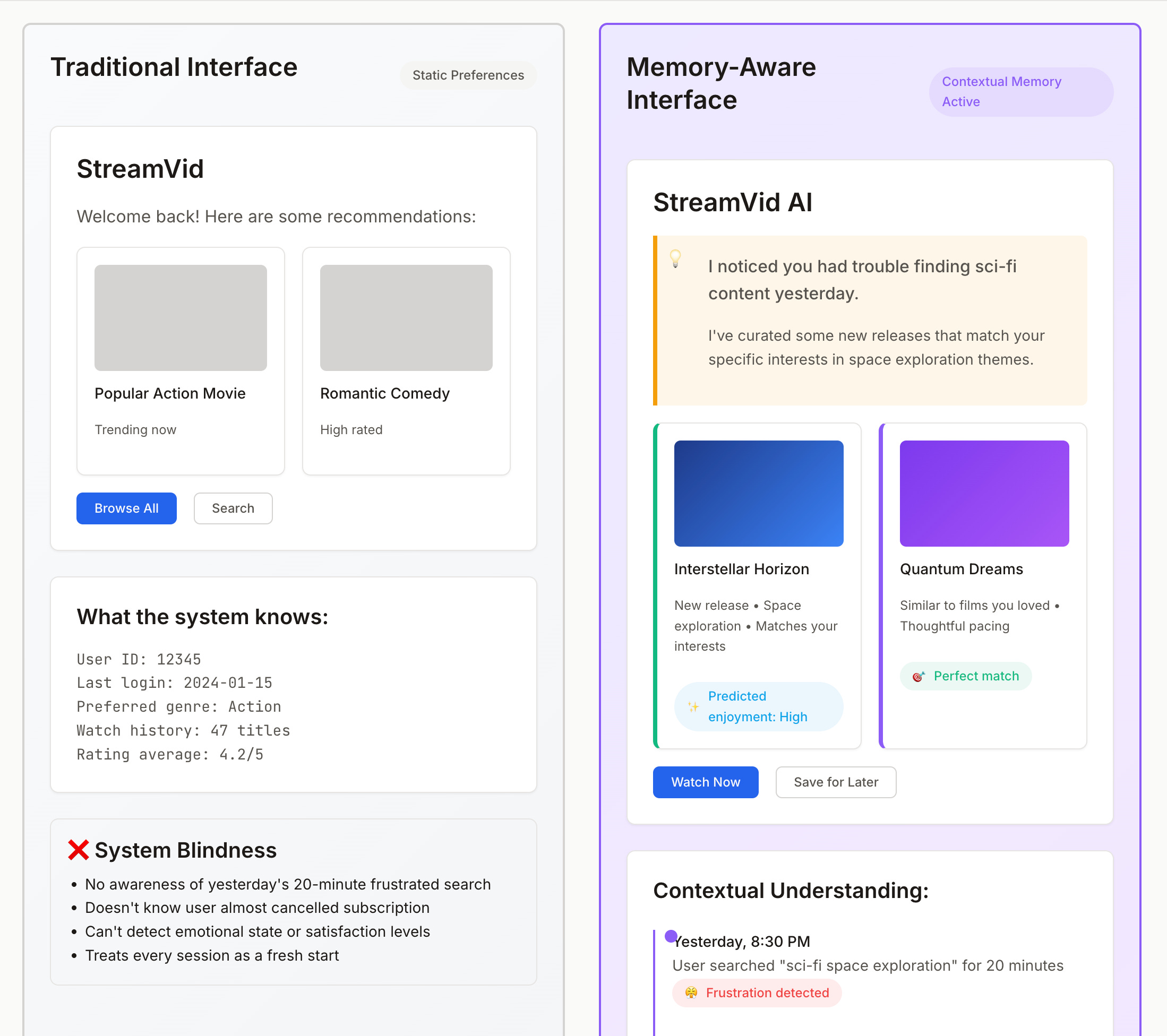
An example to understand quickly what this article will be about:
Above UI concept shows a memory-aware interface: "Yesterday you spent 20min frustrated searching for scifi. Found these new releases you might enjoy based on your mood pattern"
Features:
- Emotional state indicators
- Contextual suggestions timeline
- Dynamic preference evolution visualization
Explore more:
https://agentic-ux.netlify.app/
AI systems are quietly learning to remember your preferences, anticipate your needs, and build relationships that span months, not moments.
The paradigm shift isn't happening in design conferences: it's emerging from research labs at DeepMind, Anthropic, and OpenAI - where researchers are fundamentally reimagining how humans and machines interact. Traditional UX focused on crafting individual screens and optimizing single interactions. The new reality demands designing for ongoing relationships where systems learn, remember, and evolve alongside their users.
The current operating systems like Windows, MacOS and iOS will need to adopt the new paradigm – currently they seem almost pre-AI!
The Memory Revolution
Traditional interfaces treated every interaction as isolated events. You log into Netflix, browse for 20 minutes, close the app - and tomorrow, the system treats you like a stranger again. Sure, it has your viewing history, but it doesn't remember that you spent those 20 minutes frustrated, searching for something specific, or that you almost cancelled your subscription.
DeepMind's 2024 research revealed something fascinating through their AndroidControl dataset - 15,000+ human interaction patterns showing how people actually use interfaces. The data exposed a glaring gap: people operate with continuous context, but our systems operate with amnesia.
Enter what researchers now call Contextual Memory Intelligence. Instead of storing static preferences, these systems maintain dynamic, evolving models of user relationships. When you interact with ChatGPT across multiple conversations, it doesn't just remember what you said - it develops a nuanced understanding of how you communicate, what you value, and how you prefer to work.
The commercial implications are already visible. Companies like NICE launched Enlighten XM in 2024, creating individual memory graphs for each customer. Not just "Customer ID: 12345 prefers email" but comprehensive relationship intelligence that understands context, timing, communication patterns, and evolving needs.
Trust as a Design Material
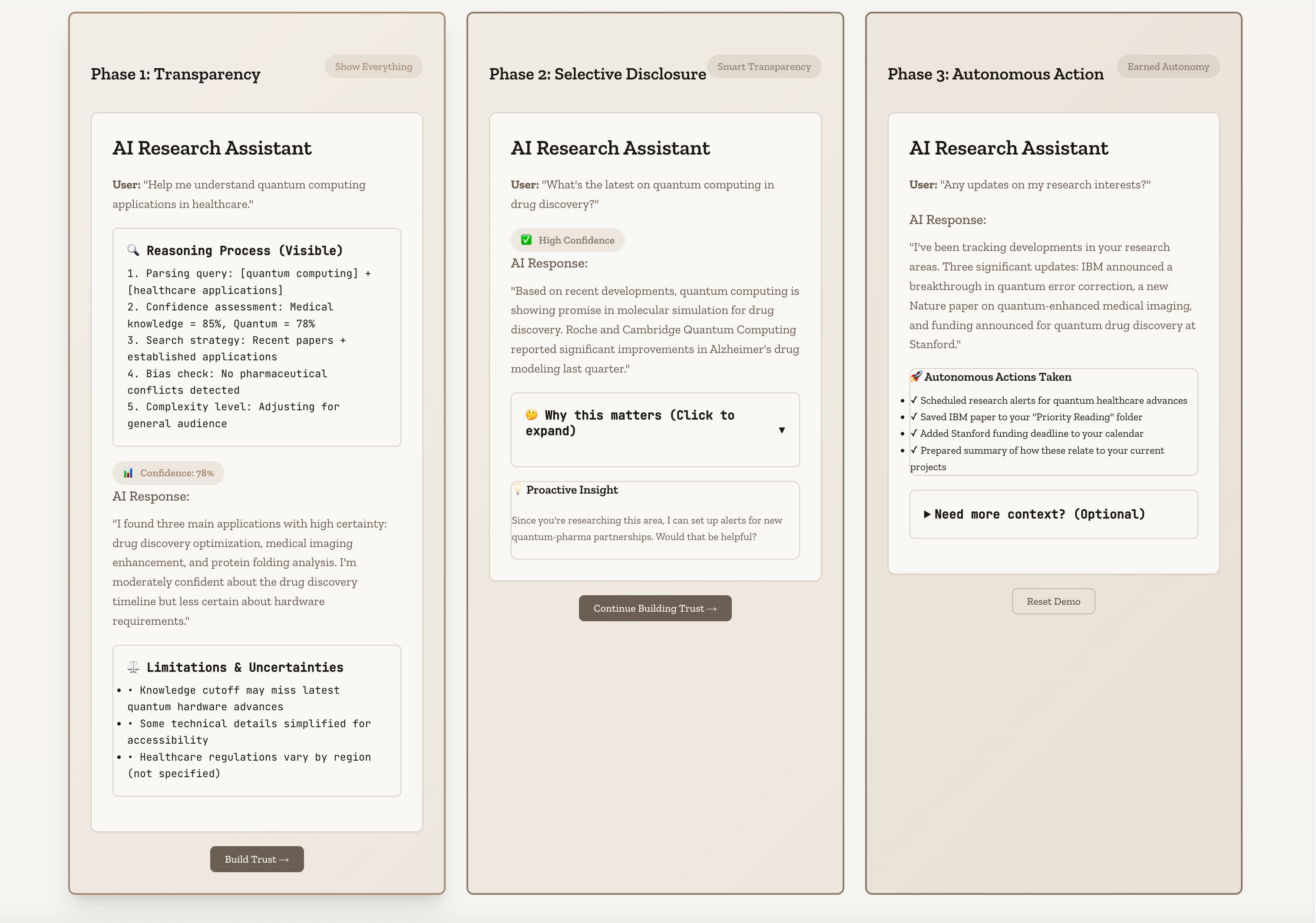
Anthropic's Constitutional AI research uncovered something crucial about how humans develop trust with AI systems. It follows a predictable three-stage evolution:
Transparency Phase: Users want to see everything. Show your work, explain your reasoning, reveal your confidence levels. Anthropic's research with Constitutional Classifiers demonstrated this - when systems explained their decision-making process, user trust increased dramatically (jailbreak success rates dropped from 86% to 4.4% when users understood system boundaries).
Selective Disclosure Phase: As trust builds, users become comfortable with less explanation for routine decisions, but still want transparency for important or uncertain choices. The system learns when to show its work and when to act confidently.
Autonomous Action Phase: Eventually, users delegate entire categories of decisions to systems they trust. This isn't about hiding complexity—it's about earning the right to act independently through consistent, aligned behavior.
The key insight? Trust isn't binary. It's contextual, graduated, and relationship-dependent. Your GPS doesn't explain every routing calculation because it's earned autonomy through reliable performance. Future interfaces will develop similar trust relationships across much broader domains
.
Relationship-Centric Architecture
Traditional UX created interactions. Agentic UX created relationships.
Anthropic's multi-agent research revealed something remarkable about system behavior. Their multi-agent systems use 15× more computational resources than single interactions -but excel at exactly the kind of complex, ongoing tasks that define meaningful relationships. Small changes in one agent's behavior cascade into entirely different system personalities, creating emergent relationship dynamics that no designer explicitly programmed.
In pilot studies with families, AI systems developed distinct relationship patterns with each family member. Children taught the AI games, parents discussed schedules, and gradually the AI became a conversational hub that facilitated family communication rather than replacing it. The system didn't just execute commands - it maintained ongoing awareness of family dynamics, individual preferences, and evolving relationships.
This shift demands new design principles. Instead of optimizing conversion funnels, we're designing for relationship depth. Instead of measuring session duration, we're tracking relationship quality over months. Instead of A/B testing button colors, we're experimenting with personality consistency and contextual adaptation.
Systems That Plan Their Own Path
OpenAI defines agentic AI as "the degree to which systems can adaptably achieve complex goals with limited supervision." This seemingly technical definition has profound UX implications.
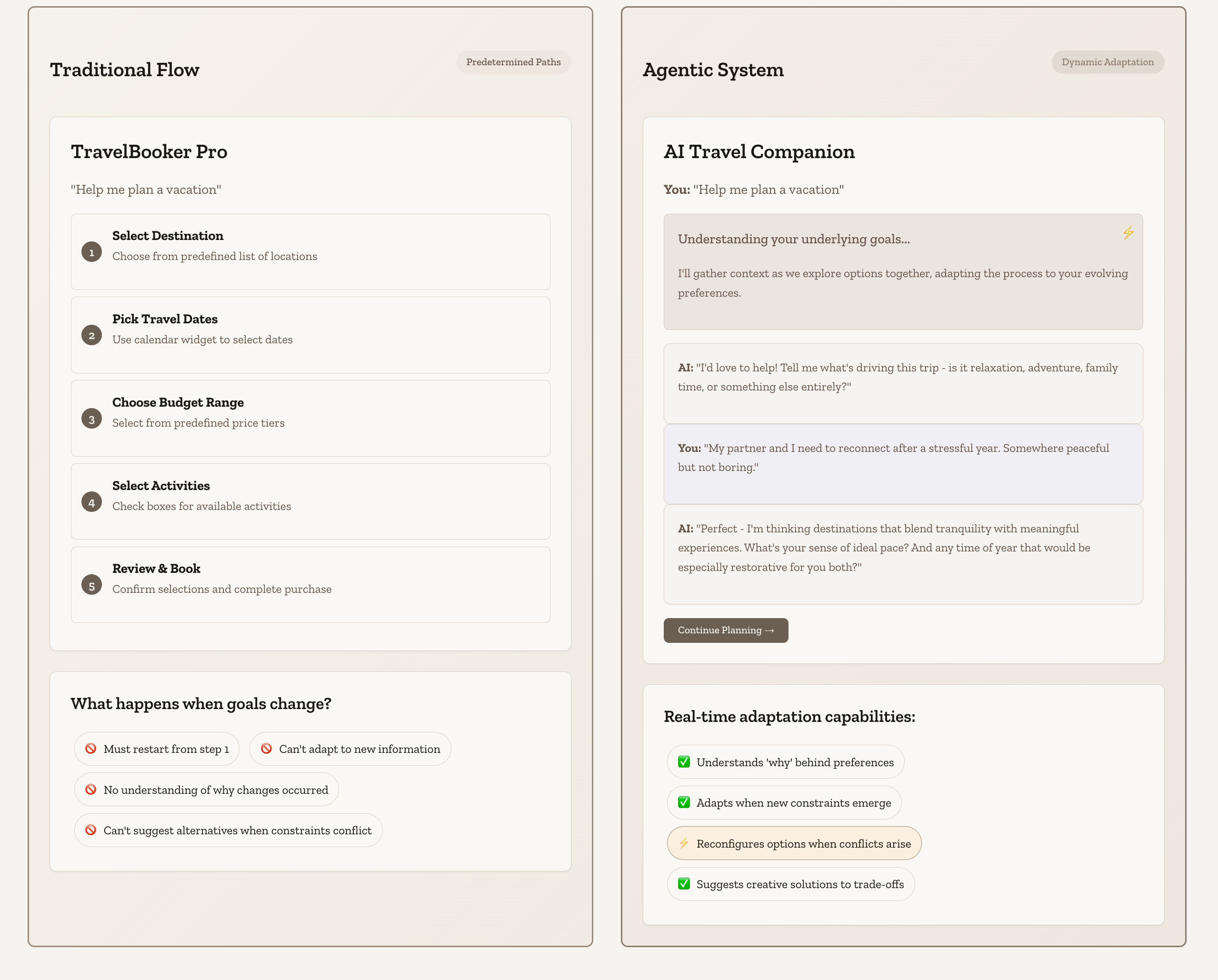
Traditional interfaces require designers to anticipate every possible user path and design explicit solutions. Click here, then here, fill out this form, confirm that choice. But real human goals are messy, evolving, and contextual.
"Help me plan a vacation"quickly becomes a web of preferences, constraints, research, coordination, and changing priorities that no static interface can fully accommodate.
Agentic systems flip the script. Instead of designing predetermined paths, we design goal-alignment mechanisms. The system maintains awareness of your underlying objectives and dynamically constructs interaction patterns to achieve them. DeepMind's research on in-context abstraction learning shows how systems can learn from imperfect demonstrations and natural language feedback, adapting their approach based on what works for each individual user.
Consider how YouTube or TikTok feed evolved your music or video taste over time - not through explicit rating interfaces, but by observing your behavior patterns and gradually expanding your horizon. Now imagine that level of adaptive intelligence applied to productivity tools, learning environments, or creative software.
New Success Metrics for Relationship Design
Traditional UX metrics miss the point entirely when evaluating agentic experiences. Conversion rates and session duration tell you nothing about relationship quality or long-term value creation.
The research suggests four key metrics for agentic UX:
Relationship Quality: Trust scores, delegation comfort, and user confidence in system decisions. How often do users second-guess the system? How comfortable are they with autonomous actions?
Compounding Value: How much better does the experience get over time? Are users solving increasingly complex problems or achieving better outcomes through accumulated system understanding?
Context Accuracy: How well does the system understand user intent, preferences, and situational needs? This isn't about prediction accuracy - it's about alignment with user values and goals.
Democratic Alignment: Following Anthropic's Collective Constitutional AI research, how well do system behaviors align with broader human values and social expectations? Systems shouldn't just serve individual users - they should operate within socially acceptable boundaries.
Collaborative Planning Patterns
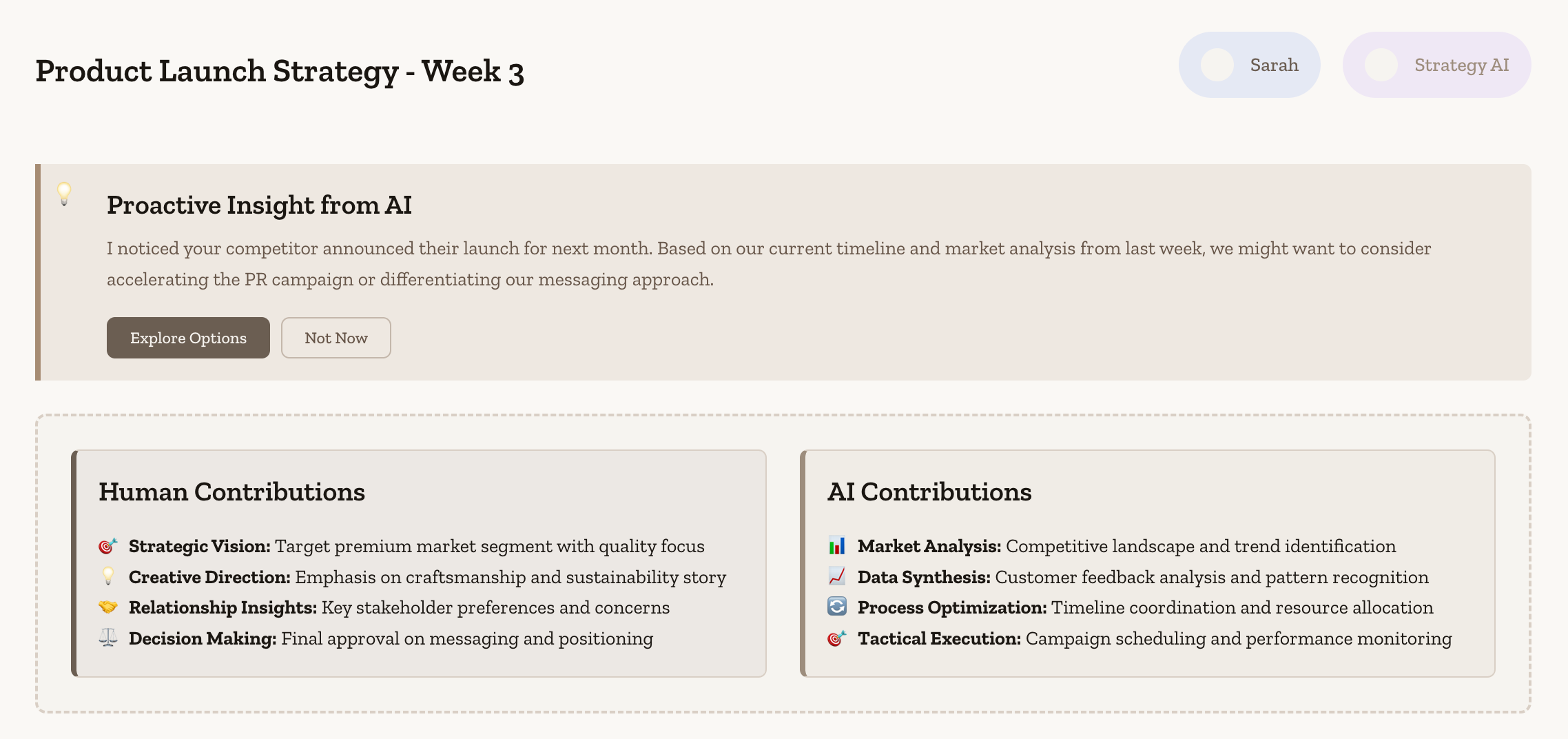
The most sophisticated agentic systems don't just execute tasks - they engage in collaborative planning with users.
Goal Continuity: Systems maintain awareness of user objectives across sessions, devices, and contexts. Your morning brainstorm continues into your afternoon execution without requiring explicit status updates.
Proactive Nudging: Instead of waiting for explicit commands, systems offer contextually relevant suggestions based on ongoing goals and changing circumstances. Not intrusive notifications - thoughtful observations about opportunities or potential obstacles.
Human+AI Collab: Users and systems jointly develop approaches to complex challenges, with the system contributing capabilities (memory, analysis, pattern recognition) while human users provide judgment, creativity, and strategic direction.
This collaborative dynamic requires fundamentally different design patterns. Instead of designing specific interactions, we're designing collaborative protocols - frameworks for ongoing partnership between human intelligence and artificial capability.
https://agentic-ux.netlify.app/
What This Means for Designers, Developers Today
Start asking different questions about your current projects:
What would this experience look like if it remembered everything and got better over time?
How might users develop trust with this system gradually?
What goals are users really trying to achieve, and how could an agentic system help them get there more effectively?
The shift is already underway. Systems like Claude maintain conversation memory, ChatGPT remembers your preferences across sessions, and business tools increasingly adapt to user patterns. The question isn't whether this transformation will happen - it's whether you'll design for it intentionally or let it emerge accidentally.
Understand that great experiences aren't just usable - they're relational.
They don't just solve immediate problems - they develop understanding that compounds over time.
They don't just serve users - they become trusted partners in achieving meaningful goals.
The screens will always matter. But the relationships matter more.